
Decorex 2025 Highlights: Craft, Character and a Return to Expressive Interiors

Returning to Olympia London from 12–15 October 2025, Decorex brought together more than 280 interior brands alongside designers, makers and craftspeople for its 47th edition.
More than simply a showcase of new collections, the 2025 edition reflected a wider shift taking place across contemporary interiors: away from anonymous perfection and towards spaces with greater personality, materiality and narrative.
From immersive installations to highly considered craftsmanship, these were some of the ideas that stayed with us.
Craftsmanship Takes Centre Stage
One of the clearest messages from Decorex 2025 was the continuing value of the handmade.
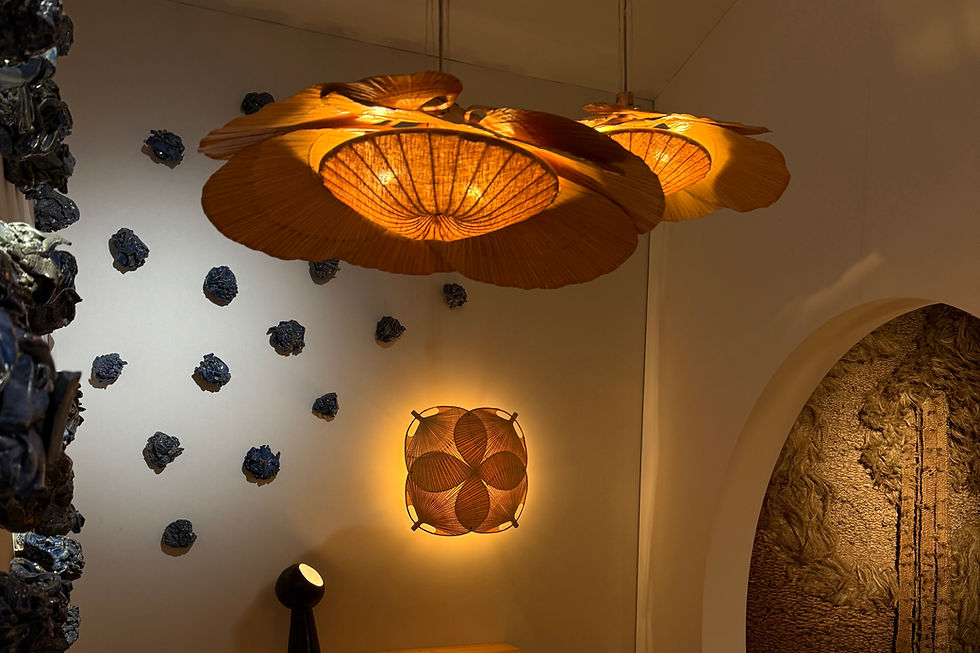
Against an industry increasingly influenced by technology and accelerated production, craftsmanship felt particularly relevant. Bespoke furniture, specialist finishes, decorative surfaces, sculptural lighting and tactile textiles placed the evidence of the maker firmly back into the interior.
It is part of a broader move towards pieces with provenance and longevity: objects that feel collected rather than simply specified.
Decorex's Making Spaces programme reinforced this connection between contemporary interiors and specialist craft, while the show as a whole demonstrated how artisanal techniques can sit comfortably within sophisticated modern schemes.
Interiors Become More Expressive
If quiet luxury dominated the design conversation for several seasons, Decorex 2025 suggested something more individual was beginning to emerge.
Colour, pattern, sculptural silhouettes and richly layered materials appeared throughout the show. Decorex itself subsequently identified a renewed form of maximalism among the directions emerging from 2025, highlighting the sculptural lighting of Haberdashery and bespoke statement furniture by Hyde House among its examples.
This wasn't maximalism for the sake of excess. The more interesting spaces balanced decorative confidence with restraint.
The result was an approach that felt personal rather than prescribed: rooms built through texture, objects, art and craftsmanship rather than adherence to a single recognisable aesthetic.
The New Luxury Is Tactile
Materiality was another recurring theme.
Natural stone, timber, metal, richly woven fabrics, specialist paint finishes and handcrafted surfaces created interiors designed not only to be photographed but experienced.
Luxury increasingly seems to be moving away from the immaculate and overtly polished towards something warmer and more sensory. Materials that develop character over time, evidence of the hand and subtle imperfections can give a space an emotional quality that highly manufactured finishes struggle to replicate.
For designers, this also puts greater emphasis on sourcing: knowing who made an object, how it was produced and why a particular material belongs within the wider story of a project.
Palomino: Designing an Experience
Among the show's major spatial collaborations was Palomino, the VIP Lounge conceived by Tolu Adeko.
Inspired partly by Olympia's theatrical history, the concept was developed as a sequence of five distinctive spaces rather than a conventional exhibition lounge. Neoclassical references and early 20th-century influences were layered with bespoke contemporary craftsmanship, including embossed leather, natural stone, antiqued mirror, straw marquetry and specialist decorative finishes.
What made the project particularly relevant was its emphasis on experience.
Rather than treating an interior purely as a composition of furniture and finishes, Palomino considered movement, atmosphere, acoustics, texture and discovery. It demonstrated something increasingly important across both residential and hospitality design: memorable spaces need to create an emotional response as well as a visual one.
An English Garden Inside Olympia
The Decorex Bar offered a very different interpretation of immersive design.
Created by Lucy Mayers of Sibyl Colefax & John Fowler, the installation transformed the large Olympia setting into an autumnal garden-inspired retreat. A monumental gold tree, soft pink silk canopy and garden-like flooring helped turn the temporary bar into a layered environment referencing both English country-house tradition and the outdoors.
It was a reminder that heritage needn't result in nostalgic interiors.
Instead, familiar references can be exaggerated, reinterpreted and combined with contemporary ideas to create something both recognisable and unexpected.
Decoration Returns to the Conversation
The visual identity for Decorex 2025 itself celebrated decorative art.
Artist Natasha Mann created the year's creative using traditional techniques informed by her study of Moroccan decorative painting. Her geometric compositions were hand-drawn with a compass and ruler and produced using natural pigments, egg tempera and gold leaf.
It felt representative of a broader direction visible across the fair: renewed appreciation for ornament and decorative skill after years in which minimalism often dominated the visual conversation.
Pattern and decoration were no longer being treated simply as finishing touches. At their best, they became integral to the architecture and identity of a room.
From Products to Conversations
Decorex also expanded the way ideas were exchanged beyond the traditional exhibition stand.
The 2025 edition introduced Design Circles, intimate round-table discussions bringing designers and industry specialists together around subjects affecting the future of the profession. A further new format, Brand Perspectives, invited design brands to discuss their creative processes, philosophies and the thinking behind their work.
That shift feels significant.
For a design fair to remain relevant, discovery cannot be limited to seeing another new chair, fabric or lighting collection. Context matters increasingly: how something is made, what problem it addresses and what ideas sit behind it.
What Decorex 2025 Told Us About the Future of Interiors
Perhaps the most interesting takeaway from Decorex 2025 was not a single colour, material or aesthetic trend.
It was the growing desire for character.
We are seeing interiors becoming warmer, more layered and more personal. Craft is being valued alongside innovation. Heritage is being reinterpreted rather than replicated. Technology is increasingly expected to disappear seamlessly into an interior rather than dominate it.
And sustainability is becoming less of a separate design category and more closely connected to the fundamental questions of quality, provenance and longevity.
The most compelling interiors are moving beyond the idea of simply looking luxurious. They need to feel considered, individual and capable of telling a story.
For Visualista, that is perhaps the most interesting direction to take from Decorex 2025 - and one we expect to continue shaping the design conversation well beyond the exhibition halls.
Decorex returns to Olympia London from 11–14 October 2026.


Comments