
London Design Festival 2026: The Highlights, Trends and Design Districts That Defined September
From Focus/26 at Chelsea Harbour and the experimental energy of Brompton to the newly expanded Shoreditch Design Week, London Design Festival 2026 turned the capital into a city-wide conversation about materials, craftsmanship, technology and the future of interiors. Visualista Edit looks back at the places, ideas and events that mattered.

Every September, London shifts gear.
Showrooms launch their autumn collections, galleries open late, temporary installations appear inside museums and unexpected corners of the city, while designers, architects, makers and editors move between neighbourhoods in search of what feels genuinely new.
From 12-20 September, London Design Festival 2026 returned with a programme spanning 11 official Design Districts, alongside major institutions, installations, exhibitions and independent events across the capital.
Yet this year's festival felt less defined by a single visual trend than by a broader shift in thinking. Materials mattered more. Craft was repeatedly reconsidered through technology. Imperfection became something to celebrate rather than disguise. And, despite the increasingly sophisticated role of AI and digital tools within the design process, the human hand remained remarkably visible.
Here are the places and ideas that defined London Design Festival 2026.
Focus/26: the interior design world gathers at Chelsea Harbour
For the professional interiors community, Focus/26 at Design Centre, Chelsea Harbour remained one of September's essential destinations.
Running from 14-18 September, the event brought together autumn launches from international interiors brands, more than 30 additional House Guests and an extensive programme of talks, showroom presentations, tours and masterclasses.
Unlike the more experimental installations elsewhere during London Design Festival, Focus continues to occupy a particular place in the calendar: this is where inspiration meets specification.
Textiles, wallcoverings, furniture, lighting and decorative finishes were presented not simply as concepts, but as elements intended to find their way into real residential and hospitality projects.
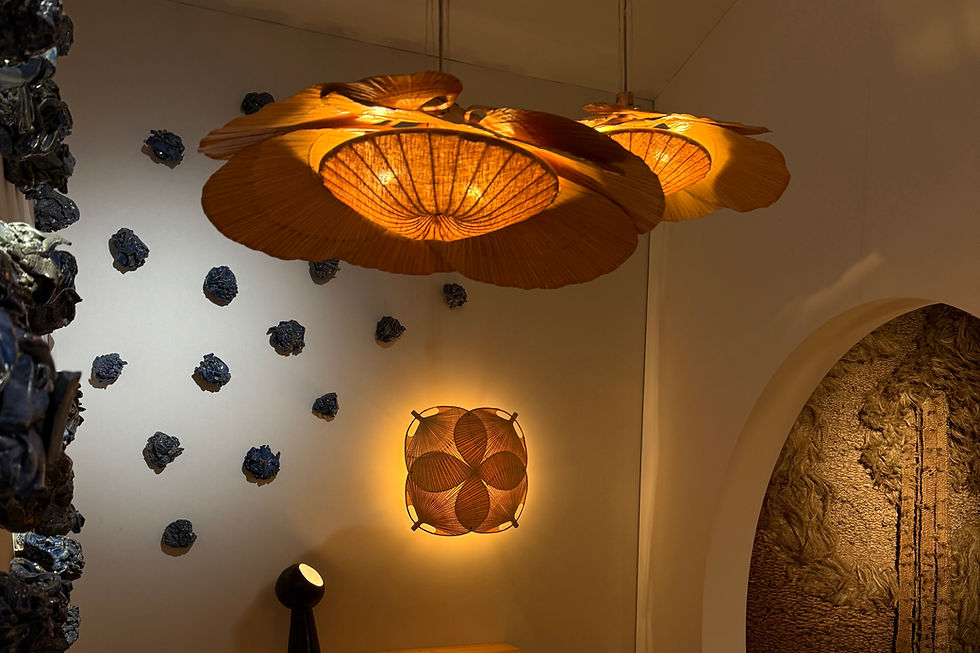
Across the showrooms, the mood leaned towards layered, tactile interiors rather than visual perfection for its own sake. Pattern, craftsmanship, expressive surfaces and materials with a sense of provenance continued to challenge the colder minimalism that dominated interiors several years ago.
The programme extended well beyond product launches. Focus/26 included more than 100 free showroom events alongside its Conversations in Design talks, Grow Your Business sessions, Designer Toolkit programme and a new Learning Lounge.
For designers, stylists and specifiers, Chelsea Harbour remains less about chasing one headline installation and more about understanding where the interiors industry is moving commercially.
Brompton Design District: Perfectly Imperfect
If Focus represented the polished side of the interiors industry, Brompton Design District offered something deliberately less resolved.
Its 2026 programme, Perfectly Imperfect, was curated by Alex Tieghi-Walker and centred on the experiments, materials, conversations and unexpected turns that exist before an object reaches its finished state. The principal exhibition was presented at The Lavery at Cromwell Place throughout the Festival.
It was an appropriate theme for the current design climate.
After years of immaculate digital imagery and algorithmically polished aesthetics, there is renewed value in seeing evidence of process: the irregular surface, the maker's hand, material experimentation and even failure.
Rather than treating imperfection as a flaw to correct, Brompton asked whether it might actually be the thing that gives an object its identity.
That question extended beyond aesthetics. It touched on the way designers work, how materials are sourced and how objects acquire emotional value.
For Visualista, this was one of the more relevant ideas running through LDF 2026: luxury is increasingly being communicated through material intelligence, provenance and individuality rather than perfection alone.
Shoreditch Design Week: a significant new chapter for East London
One of the biggest structural changes to London Design Festival this year happened in East London.
After 18 years as Shoreditch Design Triangle, the district was relaunched and substantially expanded as Shoreditch Design Week, running from 15-20 September.
The new format brought together more than 60 showrooms, galleries and creative spaces, with hundreds of events across the neighbourhood. Its organisers described it as London Design Festival's largest dedicated design district.
The change was more than a rebrand.
Four principal exhibition destinations helped give Shoreditch a stronger fair-like structure, while the surrounding showrooms and studios preserved the exploratory quality that has always made East London interesting during design week.
The result was one of the Festival's most varied destinations, moving easily between commercial interiors, emerging designers, experimental objects, materials, workplace design and independent creative culture.
Material Matters finds a new home
A particularly important addition was Material Matters, which relocated to UNLOCKED Shoreditch on Curtain Road for its fifth London edition.
Across two floors of the former industrial building, the fair placed materials, rather than finished products alone, at the centre of the conversation.
Among the projects were waste-derived construction materials, regenerative biomaterials and alternatives to conventional plastic foams. Matrix Design's Hand, Code, Matter: A New Flow for Spatial Design also explored a particularly timely question: how hand-making, drawing and AI might coexist without removing the human character from design.
This made Material Matters one of the clearest expressions of a wider LDF 2026 theme.
Sustainability is becoming less convincing as a marketing label on its own. The more interesting conversation is increasingly specific: What is this object actually made from? Where did that material come from? What happens to it next? And can innovation improve its environmental impact without compromising its desirability?
Elsewhere within Shoreditch, exhibitions including Isola Design Group's In Between: From Making to Meaning continued the conversation around making, experimentation and emerging design.
The V&A: design between the physical and digital worlds
The V&A once again acted as one of London Design Festival's major institutional anchors.
For 2026, V&A x LDF: Awakenings brought a series of installations and interventions throughout the South Kensington museum, exploring how design, craft and technology can reveal forces and systems that are often invisible.
The programme included work by artists and designers including Aziza Kadyri, Sam Ghantous, Henry Svendsen, Linda Dounia and emerging designer commission Playfool.
Placed within the V&A's historic collections, these contemporary interventions created an interesting tension between permanence and rapidly evolving digital culture.
That dialogue, between analogue and digital, craft and computation, heritage and technological experimentation, appeared repeatedly across this year's Festival.
The question no longer seems to be whether technology belongs within design. It clearly does.
The more interesting question is how designers can use it without allowing technology to become the story itself.
London's landmark projects: design beyond the showroom
LDF's city-wide projects also pushed the Festival outside conventional exhibition spaces.
The official 2026 programme included The Point of Unity and Soul by Mykola Kabluka and Expolight, The Art of Sound featuring Max Cooper and Chris Watson by L-Acoustics, The Pangolin Shield by Studio Saar and Atelier One, the Craft x Tech Tokai Project, Reviving Craft: Reflection of the Mind, and MADE x Barbican.
Collectively, these projects reflected another important characteristic of LDF today: design is increasingly experienced rather than simply observed.
Sound, light, architecture, craft, digital media and spatial installation are crossing disciplines, creating projects that sit somewhere between exhibition, environment and performance.
For hospitality and interior designers in particular, that shift matters. The strongest spaces are increasingly expected to create not only an aesthetic identity but an emotional and sensory experience.
Beyond the headline districts
Part of London Design Festival's strength, and occasionally its challenge, is its scale.
The 2026 edition stretched across Bankside, Brompton, Blackhorse Creates, Chelsea, Dalston to Stokey, EC1, Fleet Street Quarter, Mayfair, Park Royal, Shoreditch and the newly established Soho Design District.
The addition of Soho was particularly fitting. Rather than concentrating London's design identity within one purpose-built fairground, LDF continues to use the city itself as its venue.
Park Royal offered a very different interpretation through the inaugural Manufactory, opening normally hidden workshops, warehouses, studios and industrial spaces to exhibitions, performances, installations and workshops.
Meanwhile, Mayfair, Chelsea and Soho connected contemporary design with galleries, luxury retail, established studios and the wider cultural life of central London.
It is precisely this contrast that makes London Design Festival different from Milan Design Week or a conventional international trade fair. London asks visitors to navigate the city and, in doing so, discover how differently design operates from one neighbourhood to another.
What did London Design Festival 2026 tell us about where design is heading?
Looking across the Festival rather than at individual launches, several ideas repeatedly surfaced.
Materiality is becoming more intelligent.Material innovation has moved from the margins towards the centre of the design conversation. Waste, bio-based materials, regenerative processes and new manufacturing methods are increasingly being considered alongside beauty and performance.
Craft and technology are no longer opposites.Some of the more interesting projects did not ask us to choose between the handmade and the digital. Instead, they explored what happens when the two inform each other.
Imperfection is gaining value.Brompton's Perfectly Imperfect articulated something already visible across interiors: a move away from anonymous visual perfection towards surfaces and objects carrying traces of process, material and human intervention.
Experience is becoming as important as product.Sound, lighting, scent, movement, storytelling and spatial choreography are increasingly part of the designer's vocabulary, particularly relevant to hospitality, retail and destination interiors.
Sustainability needs substance.Broad environmental claims are no longer particularly interesting. Designers and audiences are asking more detailed questions about sourcing, manufacturing, longevity, waste and circularity.
Visualista Edit's perspective
London Design Festival has become too large to experience in its entirety, and perhaps that is no longer the point.
The value lies in moving between very different versions of contemporary design.
At Chelsea Harbour, design is polished, specified and ready to enter a project. In Brompton, the unfinished process becomes part of the story. In Shoreditch, emerging ideas collide with material research and commercial creativity. At the V&A, contemporary technology sits within centuries of making.
Together, they offered a more nuanced picture of where design stands in 2026.
If there was one thread connecting the strongest moments this September, it was a renewed appreciation of the physical.
At a moment when images can be generated instantly and almost any aesthetic can be simulated digitally, material, texture, craft, provenance and human experience acquire greater value rather than less.
Perhaps that is why the most memorable parts of London Design Festival were not simply things that photographed well.
They were the things you wanted to touch, walk through, listen to, and understand how they were made.
Visualista Edit, exploring interiors, design, hospitality and the creative culture shaping London and beyond.


Comments